CHAAN
A Sieve for Chaiwalas
Chai is a piping hot drink made with tea leaves, milk and a blend of spices. The beverage is an integral part of Indian culture, and tea stalls serving this masala chai can be seen dotting the streets across the country.
The purpose of this project was to find areas for possible intervention in the routine of chaiwalas (tea vendors) and create a simple product to aid their everyday functioning.
Straining the tea is an incredibly tedious process, especially when handling large quantities of boiling liquid. Often, Chaiwalas use a large muslin cloth draped over the vessel to sieve the tea. Excess tea is wrung out using a pair of tongs, with the risk of spillage and burns. After straining, the cloth with the tea leaves is placed directly on the countertop, which is generally unclean.
Problem Areas
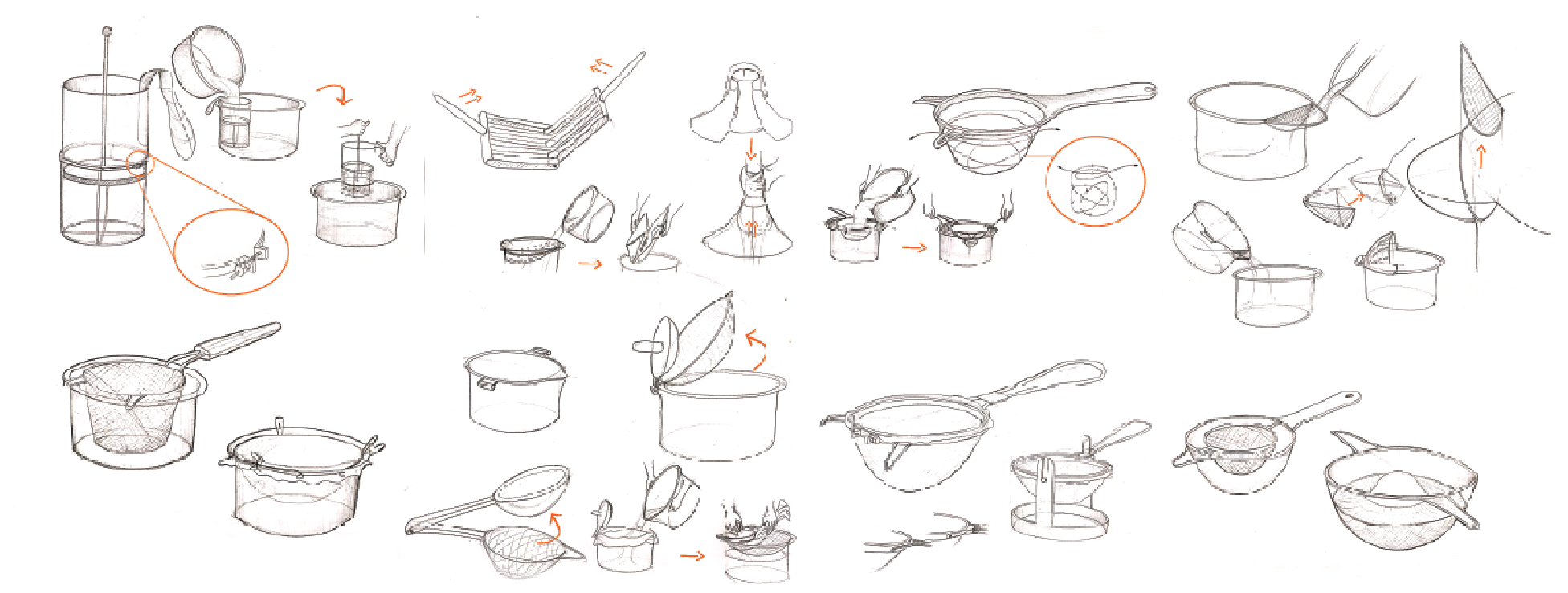
The aim was to create a sieve that minimises direct contact of the cloth with a potentially dirty surface, while reducing the time taken to strain the tea, making the process quicker and safer.
Goals
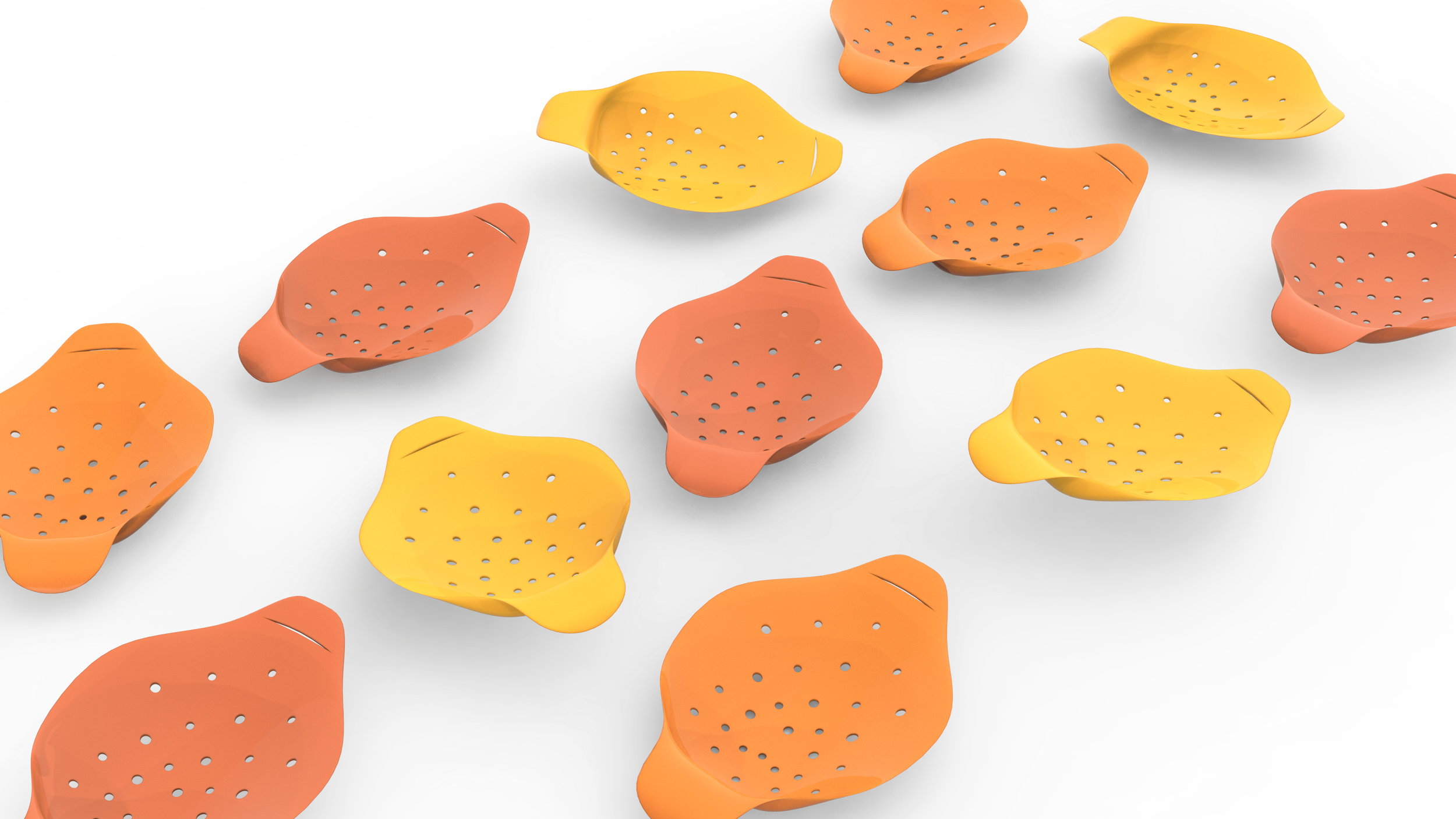
Chaan is a flexible silicon sieve that helps the tea-making process by creating a structure between the vessel and the muslin cloth. The cloth is integral to the straining process as it obstructs the finer leaves from entering the tea.
Chaan
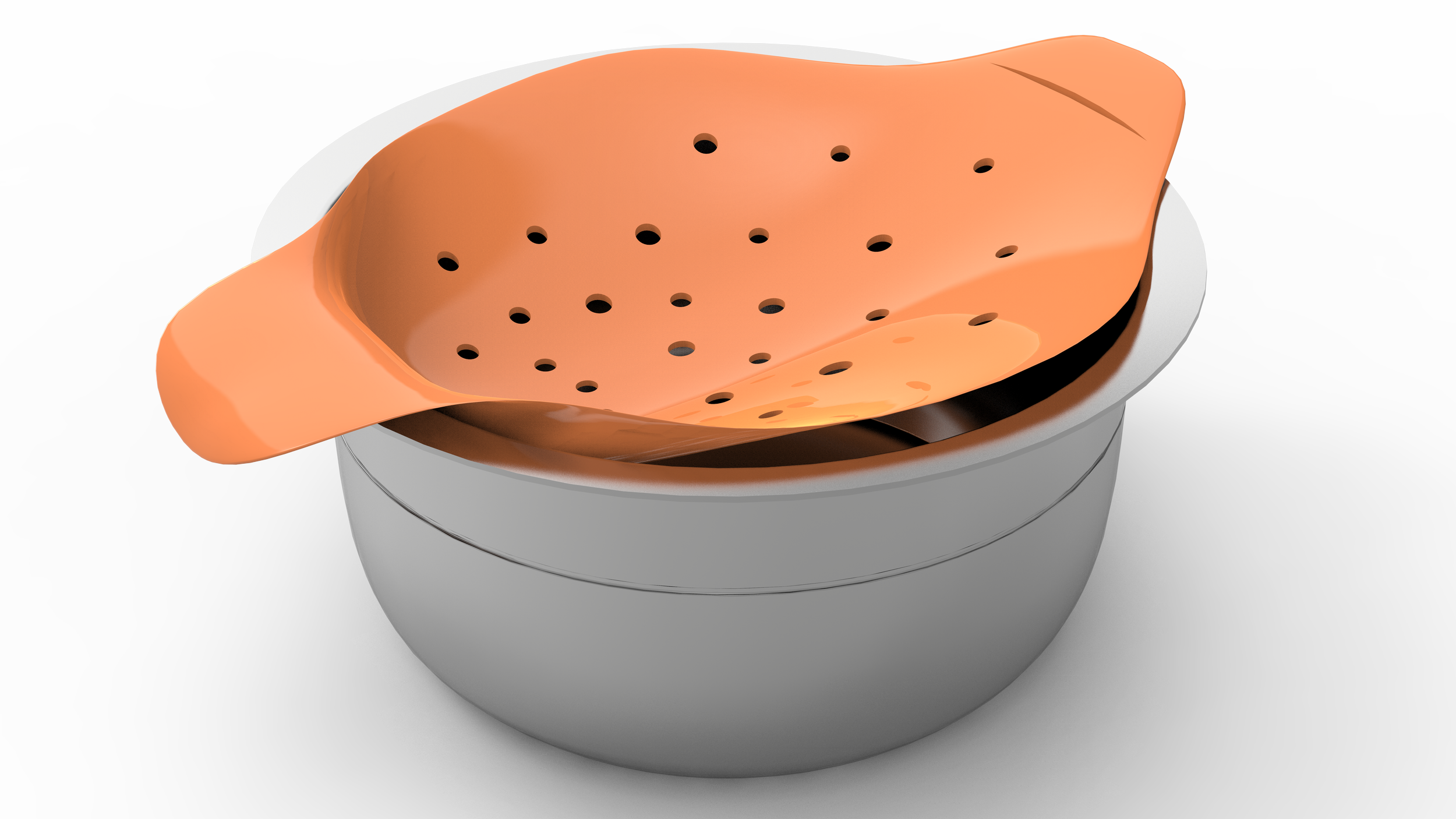

1. Chaan hooks onto the edge of the vessel, keeping the muslin cloth stable while the tea is poured through.
2. Once the tea is poured, the flap is stretched upwards to wring out any excess tea.
3. Chaan folds by slotting the into the flap to limit contact of the cloth with the counter and for easy storage till cleanup.
A.04 Chaan, 2017
Reflections, 2025